
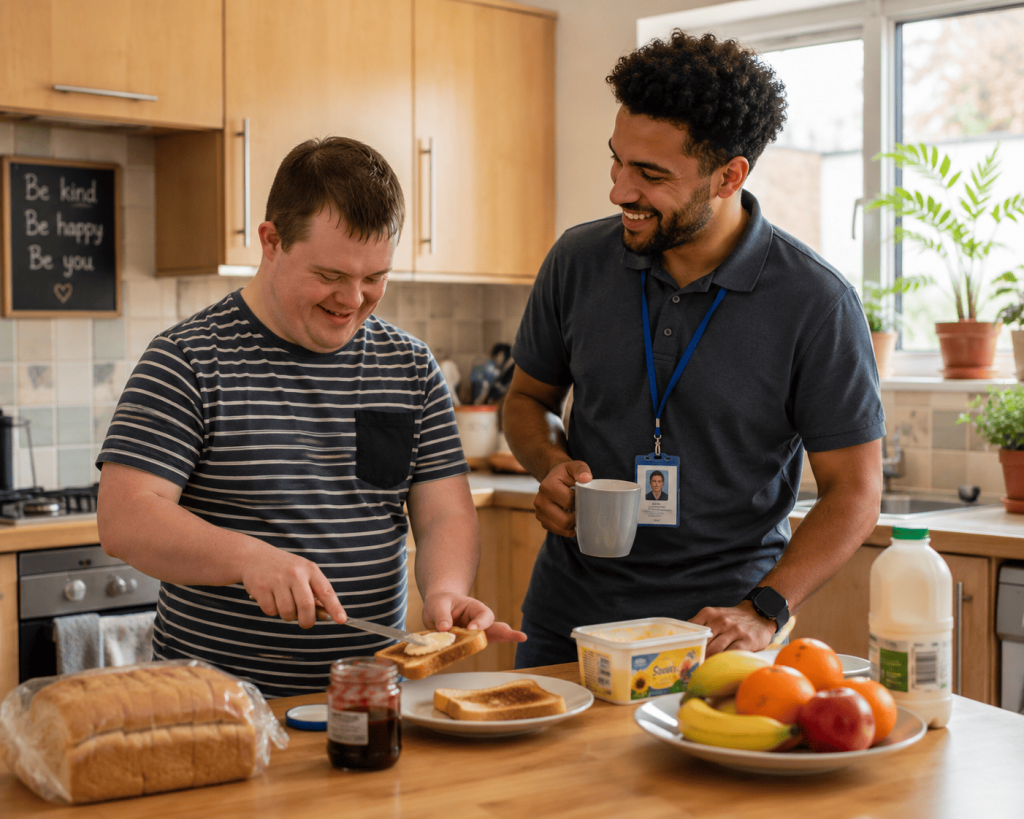
One of the questions families ask us most often is: ‘What will daily life actually look like for my loved one?’ It is a vital question, and the honest answer is: it depends entirely on the individual. That is the whole point of person-centred supported living.
For some people, a typical day might involve waking up independently, preparing breakfast, attending a community gardening project in the morning, and meeting a friend for lunch. For others, it might mean structured support with getting up and personal care, followed by a life skills session at home, a short walk, and an evening hobby class. For others still, it means 24-hour waking support in a calm, predictable environment that helps them feel safe.
We do not prescribe what a good day looks like — we ask, listen, and then build the conditions that make your version of a good day possible, every day.
The Importance of Routine
Routine is important for many people, particularly those with autism, learning disabilities, or mental health conditions. A predictable daily routine provides a sense of stability and security. It reduces anxiety and helps people feel in control.
However, routine should not be rigid. It should be flexible enough to accommodate the individual’s changing needs and preferences. It should also allow for spontaneity and choice.
A Typical Morning
A typical morning at Empower Life might look something like this:
- Waking up — The individual wakes up at their preferred time. Some people like to wake up early; others prefer a later start. The support worker is available to assist with waking, if needed.
- Personal care — Support with personal care is provided with privacy and dignity. The individual can choose how much assistance they want and who provides it.
- Breakfast — The individual prepares breakfast with support from the support worker. This is an opportunity to develop independent living skills and make choices.
- Medication — Medication is administered at the agreed time, with full support and supervision.
- Planning the day — The individual plans the day ahead with their support worker. They discuss what they want to do, where they want to go, and who they want to see.
A Typical Afternoon
A typical afternoon at Empower Life might include:
- Activities — The individual participates in activities that interest them. This could include attending a community group, pursuing a hobby, going to the gym, or visiting friends and family.
- Learning and development — The individual works on life skills, such as cooking, managing money, or using public transport. They may also attend college, a training programme, or a work placement.
- Social connections — The individual spends time with other people, building friendships and social networks. This could be through a community group, a club, or informal gatherings.
- Meal preparation — The individual prepares a meal with support from the support worker. This is an opportunity to develop independence and make healthy choices.
A Typical Evening
A typical evening at Empower Life might include:
- Leisure time — The individual spends time doing things they enjoy, such as watching television, reading, listening to music, or relaxing.
- Socialising — The individual may meet friends, join a community activity, or spend time with family.
- Reflection — The individual reflects on the day with their support worker. They discuss what went well, what could have been better, and any changes they would like to make.
- Planning the next day — The individual plans the next day with their support worker, making choices about what they want to do and where they want to go.
- Bedtime — The individual prepares for bed with support from the support worker. This may include personal care, medication, and settling in for the night.
Weekends and Holidays
Weekends and holidays at Empower Life are similar to weekdays, but with more opportunities for leisure and socialising. The individual may choose to go on a trip, visit family and friends, or spend time on their hobbies and interests.
We are available to support individuals 365 days a year. Support is adapted to suit the individual’s needs and preferences on any given day.
Supported Independent Living
Some of the people we support live fully independently, with check-ins and support as needed. Others require 24-hour support. The level of support is determined by the individual’s needs and preferences, and it can change over time.
The goal is always to enable the individual to live the life they choose, with the right level of support around them.